Quick Question:

Have you ever taken the time to evaluate what the old training model costs you in terms of time, expense, and lack of implementation?

NOW...

Discover A New Advanced Training System To
Complete your Domestic Violence Treatment Provider Certification or Meet your Annual Continuing Education Requirements...

3X Faster And With 84% Less
Out-of-Pocket Expense
With Immediate Program Integration
!

(Also, Continuing Education for Psychologists, Social Workers, Nurses, Judges, Attorneys, Clergy, Counselors, Marriage and Family Therapists, Physicians, Educators, Law Enforcement, Probation and Parole, Psychiatrists, Shelter and Crisis Center Workers, Addictions Counselors)

House of Peace Provides Interactive
Virtual Training with Our Highly Experienced
Faculty for Effective, Immediate, Treatment Based Implementation


Dear Domestic Violence, Addictions, and Mental Health Treatment Professional,

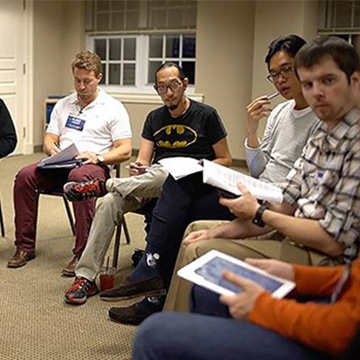
Welcome to your Virtual Training Center. Now you get your cutting-edge Domestic Violence Treatment Training virtually. Obtain your certification and continuing education training without traveling away from your home or office.

Courses offered two times weekly in mini-virtual teleseminars. Complete 7 hours of training in two weeks from the comfort of your office or home. Trainings provided through teleseminars by our highly experienced faculty.

  • Small groups lead to quick integration of Knowledge, interactive Skill development, and documented effective Approaches.
  • Courses limited to 12 participants to provide interactive learning. Be sure to register early. Spaces fill up quickly.
  • Courses continually updated to reflect current research. Your Time Is Focused On Client Treatment. We Pull The Nuggets From The Research And Show You How To Translate Theory Into Practice.
  • All you pay to hook up is your long distance charge. The same as you pay when you call Aunt Sue


x
Stop attending expensive out-of-town Domestic Violence Training where you pay over $1245 in expenses, fees, and lost revenue
x
Stop being lost in crowded ballrooms where you are one of the sea of faces, maybe getting your question answered
x
Stop settling for training where you take lots of notes and leave with no practical skills or applications
check
Do attend virtual training with a previously certified domestic violence counselor/counselor educator
check
Do be part of a small training group where you have interaction at all times with the trainer
check
Do be involved in interactive/experiential training you can implement immediately into your practice
check
Do gain knowledge, skills, and effective approaches to treat Domestic Violence clients
check
Do sit in the comfort of your office or home and receive training in small, easily digestible bites, in between clients, over 2 weeks, 2 days each week


Experience Results in Your Practice
Just Like Victoria Youngblood does in hers


Here's what Peg Rayburn
Discovered with Domestic Violence and
Addiction Training


Take This Quick Survey To Let Us
Know Exactly What Training You Want Now.

Receive Your Free Report When You Complete The Survey.

Fill out the following form and you will be taken to the Assessment immediately.
Name:
Email:
Phone:
Your information is safe with us.
We value your privacy. We never
make our lists available to others.
You may unsubscribe at any time.


Virtual faculty:

Debra WingfieldDebra Wingfield, Ed.D., LPC (Colorado) educated psychotherapists in small group training and university classrooms for over 15 years. Dr. Wingfield was in private practice for over 20 years focused on treating Adult Children from Dysfunctional Families; Child Abuse Victims; Domestic Violence Victims, Offenders, and Child Witness victims.

She presented trainings and classroom courses in Domestic Violence Treatment, and Addictions related to Domestic Violence. Now these up-dated courses (from her classroom curriculum) and training workshops are made available to you virtually,using Green Technology.


All training courses require

  • Attendance for the total hours offered,
  • Passing score on “experiential based” training quiz in order to receive certificate of attendance and course completion.
  • Training bonus: All courses are audio-taped. Call files are made available to participants within 24 hours after the call as downloadable MP3 files. All course materials are e-mailed or faxed to participants prior to each call.
  • Enroll now for upcoming courses: $197/7 training hours (value $1245.00). Each course is 7 hours. Scroll down and select the courses that meet your needs, then follow the directions to “Register Online Now”.


Contact our international headquarters located in
Pueblo West, CO Phone: 719-647-0652

questions@houseofpeacepubs.com


Course Descriptions


Victim Dynamics
Description: Focuses on victim dynamics, indicators victims may present without revealing an abusive relationship, obstacles and barriers to leaving abusive relationships and treatment stages for recovery.

Faculty: Debra Wingfield, Ed.D.


Impact of domestic violence on victims

Description: The cycle of violence is reviewed. Participants learn to identify the reinforcing nature of violence and the impact on the victim. Develop an understanding of the issues victims bring to relationships and perpetrators manipulation of these issues to perpetuate domestic violence.

Faculty: Debra Wingfield, Ed.D.


DV Offender Typologies and Types of Abuse
Description: Offender typologies provide the treatment provider with in-depth understanding of the types of offenders who present for treatment and different approaches needed to treat these various typologies. Types of Abuse addresses the specific types of abuse present in domestic violence; power and control versus equality-based relationships are presented in-depth. 

Faculty: Debra Wingfield, Ed.D.


New red arrowForensic therapy

Description: Forensic therapy with Domestic Violence Offenders addresses the differences between providing traditional therapy and treatment of criminal offenders. The course covers the particular characteristics and dynamics of Domestic Violence offenders with effective intervention techniques used in treatment toward reduction of recidivism and maintaining victim safety.  

Faculty: Debra Wingfield, Ed.D.


Offender self management,  Offender accountability & Offender contracts

Description: Offenders are provided tools and skills in treatment groups to manage their violent behavior. They are held accountable for behavioral change from the treatment provider, probation, and the court system. Development of effective and responsive offender contracts that are monitored weekly are one of the tools to bring all these components together.

Faculty: Debra Wingfield, Ed.D.


New red arrow Treatment within the criminal justice system

Description: Treatment providers who provide services to court-ordered offenders learn how their treatment process relates to the courts and criminal justice system. Discover the differences between treatment for criminals and those with mental illness or the worried-well. Understand the role of the treatment provider in the criminal justice system with regards to probation. Learn the importance of developing open communication with all criminal justice personnel to maintain offender containment and victim safety.

Faculty: Debra Wingfield, Ed.D.


New red arrowOngoing assessment: skills and tools & Offender responsivity to treatment

Description: Offender assessment beyond the intake evaluation occurs on an on-going basis throughout treatment. Treatment providers learn the needed skills and tools to continually assess offenders through their involvement in the group process including offender competencies assessment.  Factors considered are responsivity to treatment requirements including homework assignments, journaling, and self-reports.  Input from probation and victim advocates as well as victim concerns are all part of on-going assessment.

Faculty: Debra Wingfield, Ed.D.


Role of victim advocate in domestic violence offender treatment

Description: Offender treatment and containment requires coordination with local victim advocacy organizations and victim advocates. With victim safety being a primary aim of treatment, development of effective liaisons with local victim advocates is a key component of offender containment. This teleseminar focuses on building the team approach in your community for victim safety and offender containment. Keys to understand the philosophy of victim services and victim advocate in the treatment process are reviewed.

Faculty: Debra Wingfield, Ed.D.


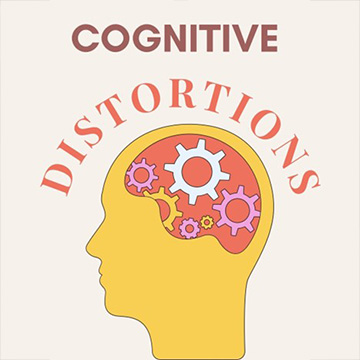
Criminogenic Needs:  Cognitive distortions & Criminal thinking errors

Description: The “Criminogenic Needs” of a person describe those behaviors that, if focused on, prove to have a positive impact on recidivism. The six criminogenic needs are addressed in various teleseminars in the Virtual Training Center. Anti-social values and behaviors; Criminal peers; Low self-control; Dysfunctional family ties; Substance abuse; and Criminal thinking.

“Cognitive distortions & Criminal thinking errors” addresses the Criminogenic Factor: Criminal Thinking. This teleseminar focuses on the types of Cognitive Distortions and Criminal Thinking Errors commonly found in domestic violence offenders. Treatment interventions are provided with interactive role plays to help the treatment provider apply the interventions.

Faculty: Debra Wingfield, Ed.D.


New red arrowCriminogenic Needs: Personality Disorders

Description: The “Criminogenic Needs” of a person describe those behaviors that, if focused on, prove to have a positive impact on recidivism. The six criminogenic needs are addressed in various teleseminars in the Virtual Training Center. Anti-social values and behaviors; Criminal peers; Low self-control; Dysfunctional family ties; Substance abuse; and Criminal thinking.

“Personality Disorders” are more commonly found among domestic violence offenders than Axis I disorders. This teleseminar focuses on identification of personality disorders in assessment, development of personality disorders, research on criminal interventions with personality disordered offenders, and effective application of these interventions.

Faculty: Debra Wingfield, Ed.D.


Criminogenic Needs: Effects of DV on Children
Description: The “Criminogenic Needs” of a person describe those behaviors that, if focused on, prove to have a positive impact on recidivism. The six criminogenic needs are addressed in various teleseminars in the Virtual Training Center. Anti-social values and behaviors; Criminal peers; Low self-control; Dysfunctional family ties; Substance abuse; and Criminal thinking.

“Effects of Violence on Children” addresses the Criminogenic Factor: Dysfunctional family ties. This teleseminar focuses on witnessing abuse and the abusive effects, long-term effects on male and female children, and interventions to build empathy in offenders for the impact of domestic violence on their children.

Faculty: Debra Wingfield, Ed.D.


Criminogenic Needs: Intergenerational Transmission of DV
Description: The “Criminogenic Needs” of a person describe those behaviors that, if focused on, prove to have a positive impact on recidivism. The six criminogenic needs are addressed in various teleseminars in the Virtual Training Center.

Anti-social values and behaviors; Criminal peers; Low self-control; Dysfunctional family ties; Substance abuse; and Criminal thinking.


“Intergenerational Violence” addresses the Criminogenic Factor: Dysfunctional family ties. This teleseminar focuses on Family of Origin patterns that are instrumental in the intergenerational transmission of family violence.   Identify Family of Origin Patterns related to family violence and how they contribute to domestic violence. Identify victim and offender issues related to intergenerational family violence transmission. Address Intergenerational Family Violence Treatment approaches.
Faculty: Debra Wingfield, Ed.D.


DV Clinical Interviewing
Description: DV Clinical Interviewing addresses the skills and procedures needed to develop an appropriate treatment plan for clients.  Provides a balanced, informative data base to use in treatment planning.  Special emphasis is given to court-ordered, resistive, and difficult clients. 
Faculty: Debra Wingfield, Ed.D.


Forensic Assessment and Evaluation for DV
Description: Includes training in evaluation of offenders to determine treatment needs.  Includes use of MCMI to assess personality disorders among offenders.  Evaluation includes psychological functioning, family and social relationships, substance use, risk for violence/abuse, and other key areas of functioning.

Faculty: Debra Wingfield, Ed.D.


New red arrowDV: Motivational Interviewing

Description: Theories of Motivational Interviewing and Stages of Change are reviewed as they pertain to domestic violence offenders.  Use of motivational interviewing in treatment with a cognitive-behavioral based psychoeducational approach is presented. Experiential exercises allow participants to differentiate Motivational Interviewing Techniques from other therapeutic modalities.

Faculty: Debra Wingfield, Ed.D.


New red arrowDV: Program/Client management and Program Development  101

Description: Implementation of DV standards into treatment programs requires knowledge of the standards and how they fit the program treatment process. Presented from a clinical administration perspective and program/client management focus, this teleseminar provides the participant with basic forms to administer their treatment program along with the tools and skills to develop an effective treatment program curriculum with all the elements required in the standards.

Faculty: Debra Wingfield, Ed.D., Victoria Youngblood, M.S., LPC, Certified Domestic Violence Counselor-Colorado, CAC III


DV Matrix: Multi-cultural Issues
Description: The interaction of cultural issues and domestic violence can impede the counseling process with offenders and victims unless treatment professionals address these issues directly.  Development of ethnic sensitivity for treatment professionals is encouraged. Identify cultural dynamics related to domestic violence. Family dynamics of various ethnic minorities in America related to DV. Cross-cultural counseling skills to address Domestic Violence are developed.
Faculty: Debra Wingfield, Ed.D.


DV Matrix: Sociopolitical Issues
Description: Addresses societal value systems that impact relationships.  Patriarchy, sexism, racism, homophobia, and politicism are viewed from historical perspectives, effects on value systems, and current trends.  Treatment issues related to distorted thinking in the sociopolitical arena are addressed.
Faculty: Debra Wingfield, Ed.D.


DV Matrix: Gender Issues
Description: Gender Issues focuses on socialization of males and females.  Communication style differences for males and females are addressed.  Conflict resolution skills and treatment issues are covered.  Love myths that perpetuate victims remaining in domestic violence relationships are exposed to interrupt the cycle of violence.

Faculty: Debra Wingfield, Ed.D.


DV Laws
Description: The criminal justice system is an integral part of domestic violence treatment. Domestic Violence Laws reviews the history and current Colorado domestic violence and family violence related laws in the criminal and civil justice system that relate to domestic violence. Federal Regulations that relate to state laws are reviewed.
Faculty: Debra Wingfield, Ed.D.


New red arrowDV Victims Legal Issues  

Description: The criminal justice system is an integral part of domestic violence treatment. Domestic Violence Victims Legal Issues affecting treatment of court-ordered clients addresses key issues in confidentiality, duty to warn, Orders of Protection and standards for treatment.

Faculty: Debra Wingfield, Ed.D.


DV Community Resources
Description: Society is significantly impacted by domestic violence. Over time, various resources for victim services developed to assist victims in moving forward with their lives. Resources available for victims and interactive involvement with victim advocates are an important aspect of containing domestic violence.  Local, state, and national resources are reviewed along with related legislation.
Faculty: Debra Wingfield, Ed.D.


Learning Styles in DV Treatment
Description: Training that educates on different ways in which a person learns (such as visual, auditory, tactile/kinesthetic), use of multiple-intelligences and other Learning Style inventories to assess DV clients, and how to use psychoeducation to effectively accommodate those styles.
Faculty: Debra Wingfield, Ed.D.


Criminogenic Needs: Parenting and DV
Description:

The “Criminogenic Needs” of a person describe those behaviors that, if focused on, prove to have a positive impact on recidivism. The six criminogenic needs are addressed in various teleseminars in the Virtual Training Center. Anti-social values and behaviors; Criminal peers; Low self-control; Dysfunctional family ties; Substance abuse; and Criminal thinking.


“Positive Parenting” addresses the Criminogenic Factor: Dysfunctional family ties. This teleseminar focuses on being a parent who enhances self-esteem and teaches children to be responsible for themselves. It can be very challenging when parenting role models were punishing and critical.  In this workshop, you will learn alternative means of parenting designed to raise responsible, self-reliant children with high levels of self-esteem and competent communication skills.  Treatment Professionals working with any family related issues can benefit from learning these skills to pass on to clients.
Faculty: Debra Wingfield, Ed.D.


New red arrowTrauma Issues
Description: Trauma is a major factor in Domestic Violence. Recent research validates long-term biopsychosocial trauma of Adverse Childhood Experiences (ACE) and associated trauma issues. Research on ACE factors supports the need to integrate ACE-based treatment into current Domestic Violence Offender, and Victim/survivor treatment programs. This interactive workshop reviews ACE research (extensive bibliography provided) and provides practical application of ACE-based treatment for integration into existing trauma-based treatment programs. 

The strength-based treatment program is strategically designed to provide clients with tools and techniques they can apply throughout the remainder of their lives. If additional mental health treatment is needed during highly stressful times or at various life development stages, treatment time is significantly reduced.

Faculty: Debra Wingfield, Ed.D.


Criminogenic Needs: Domestic Violence, Child Abuse, Substance Abuse: The Intersections


Description: The “Criminogenic Needs” of a person describe those behaviors that, if focused on, prove to have a positive impact on recidivism. The six criminogenic needs are addressed in various teleseminars in the Virtual Training Center.  Anti-social values and behaviors; Criminal peers; Low self-control; Dysfunctional family ties; Substance abuse; and Criminal thinking.

Training that addresses the bio/psycho/social effects of child abuse, substance abuse, the process of addiction, causes, stages and symptoms of substance abuse and other addictions (e.g. gambling and sexual), and how child abuse and addictions interact with domestic violence. 
Faculty: Debra Wingfield, Ed.D.


Criminogenic Needs: DV and Addictive Behaviors

Description: The “Criminogenic Needs” of a person describe those behaviors that, if focused on, prove to have a positive impact on recidivism. The six criminogenic needs are addressed in various teleseminars in the Virtual Training Center.  Anti-social values and behaviors; Criminal peers; Low self-control; Dysfunctional family ties; Substance abuse; and Criminal Thinking.

Domestic Violence and Addictive Behaviors (processes) focuses on the process of addiction development. How domestic violence and addictive behavior interact is explored.

Differential interventions for various treatment issues are identified.

Faculty: Debra Wingfield, Ed.D.


Resistive Client

Description: Counselors working with offenders are automatically working with a resistive population.  Discover the basis for client resistance utilizing motivational interviewing and the stages of change model. Define various areas of resistance. This includes client and counselor areas of resistance, and teaches counselors effective techniques to manage resistance. Practical applications of counseling techniques to handle client resistance in domestic violence offenders and victims are explored.

Faculty: Debra Wingfield, Ed.D.


*Domestic Violence

We look forward to serving your training needs virtually,

Debra's signature
Dr. Debra

Syndicated Author, Professional Trainer


P.S. Gain direct access to your trainer with your most important practice implementation questions

P.P.S. Experience the positive impact of virtual training immediately in your practice.

Take This Quick Survey To Let Us
Know Exactly What Training You Want Now.

Receive Your Free Report When You Complete The Survey.

Fill out the following form and you will be taken to the Assessment immediately.
Name:
Email:
Phone:
Your information is safe with us.
We value your privacy. We never
make our lists available to others.
You may unsubscribe at any time.


Contact our international headquarters located in
Pueblo West, CO:719-647-0652
questions@houseofpeacepubs.com


Copyright 2009 - Wingfield House of Peace Publications - All Rights Reserved
"));